Teams who need buyers, visitors, stakeholders, or internal audiences to understand a product, place, building, route, or process by just opening a link or webpage
What it earns the buyer
Show the whole thing at a glance, then let people inspect the details.
Use one optimized 3D asset across web pages, sales rooms, presentations, and AR paths.
Make scale flexible: microscopic or massive items can be shown in understandable scale.
What you get
Optimized browser-based interactive 3D experience
Hotspots, labels, links, and variant states
Embeddable 3D element for campaign, product, or project pages
We work from what you already have.
3D assets
A render or sales visualization
A floor plan, route, or site map
A point cloud or 3D scan
A photo of the place
Brand assets you already use
Don't have everything? Start with what you have. On the first call we'll tell you what's worth creating, and what's not.
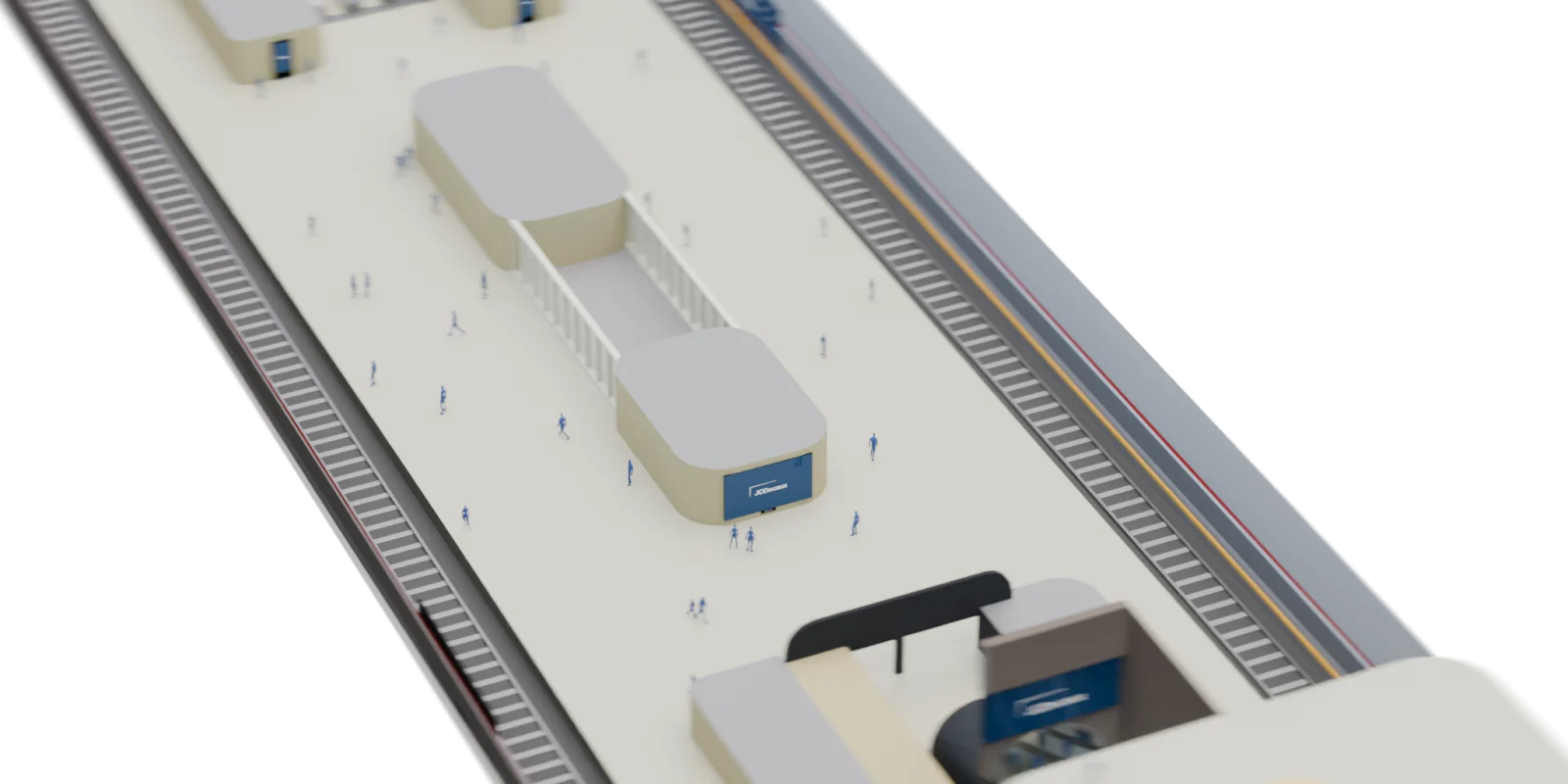
A few selected projects that include digital scale models. Interactive metro stations, an upcoming construction project and digitized art installation.
We make a small working version first. It will be a bit rough on the edges, but will allow you to test scale, anchoring, labels, and the user story before expanding the full experience.
04
Test in context
Real devices, real lighting, real public-space constraints, load times, the actual channels where people will open it.
05
Launch where it lives
Web page, QR code, embed, sales link, event demo, print extension, or public trail.
06
Maintain and reuse
Hosting, updates, reporting, refreshes, and new campaign or sales contexts after launch.
FAQ
The questions buyers actually ask. Open one to read.
Q01Do people need to install an app?+
No. Most WebAR and online 3D opens from a link or QR code on a modern phone and runs in your default browser without problems. Online 3D works on all modern desktop browsers. 1:1 real scale AR and implementations that rely on visual positioning (VPS) will launch app-free as App Clips (iOS) and WebXR (Android), and we have found that iOS devices are more reliable on this.
Q02What do we need before starting?+
A defined audience, a concrete use case, a launch context, the assets you have today, a timeline, and a budget process. Drawings, renders, 3D files, maps, or brand material are all valid starting points.
Q03Why not just make a render or a video?+
Renders and video are useful. flyAR solutions are the right call when the buyer, visitor, or stakeholder needs to have a memorable interactive experience and when their decision is worth more than a passive view.
Q04Can one asset be reused?+
Yes. That is often the point. A good AR or 3D asset supports website, sales meetings, print, outdoor, events, social, internal approvals, and later refreshes. flyAR solutions enrich all means of communication.
Q05How is this priced?+
Custom pricing starting from around 6 000 € to multiple tens of thousands. We can give you a realistic estimate after our first meeting.
Q06Which languages do you deliver in?+
Final user experiences can be created multilingually, that is something to define at the start of the project. Additional languages can also be amended to the project at later stages if required.
AppsFlyer's 2025 benchmark across 28 billion installs puts Day-1 retention at around 25%. AR apps sit below that floor, because every reviewer is a single-use case, not a habit. WebAR removes the funnel. The link that opened the experience the first time still opens it the second.
Rework runs around 12% of a typical construction budget. Peer-reviewed BIM studies in 2025 report that putting an optimised 3D model in front of stakeholders before the first pour prevents at least a third of that, and as much as half on projects that share the model early. One Asian rail case caught 3,000 design clashes and shaved 12% off construction cost on its own.
Shopify's own data, drawn from millions of stores. The 65% sits next to a 94% conversion lift on stores that add any 3D content, and a 40% drop in returns when AR closes the imagination gap. The mechanism carries from product pages to construction, museums, and brand work.