App-free WebAR experiences: a cultural route, a construction project example, and resident communication that combines WebAR with online 3D.
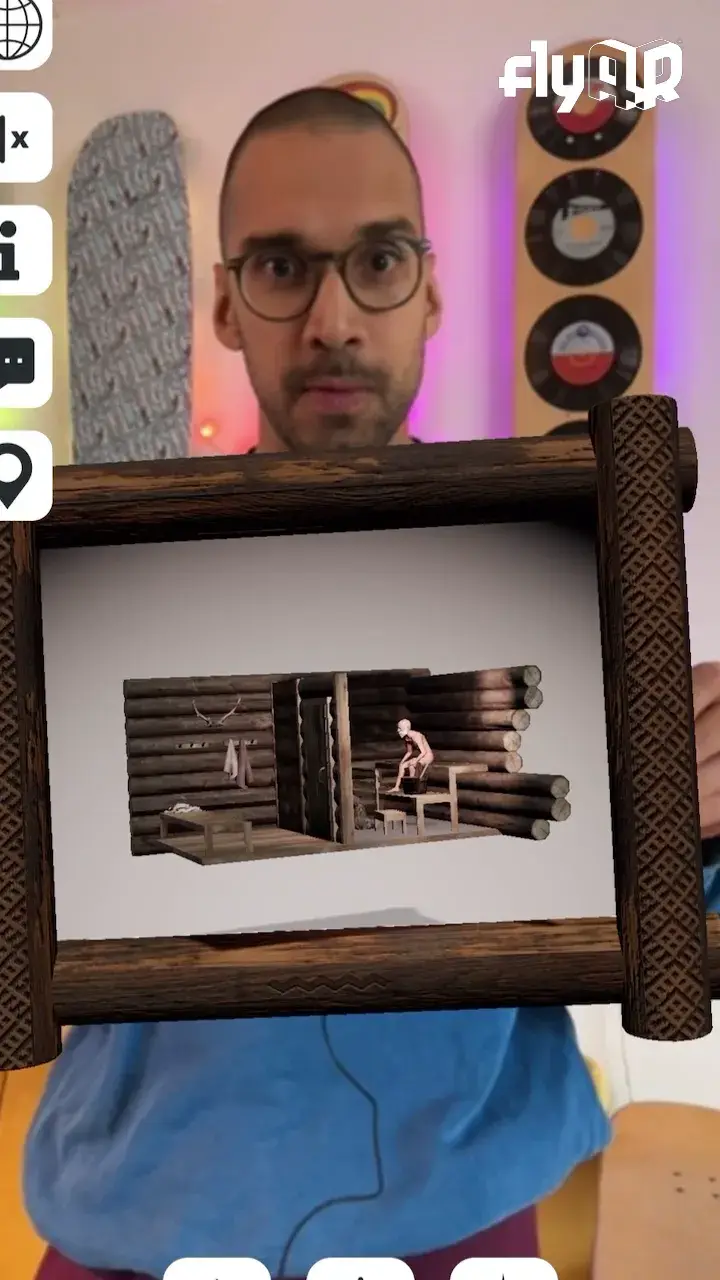
Footprints of the Kalevala: a multi-stop WebAR trail for cultural route storytelling.
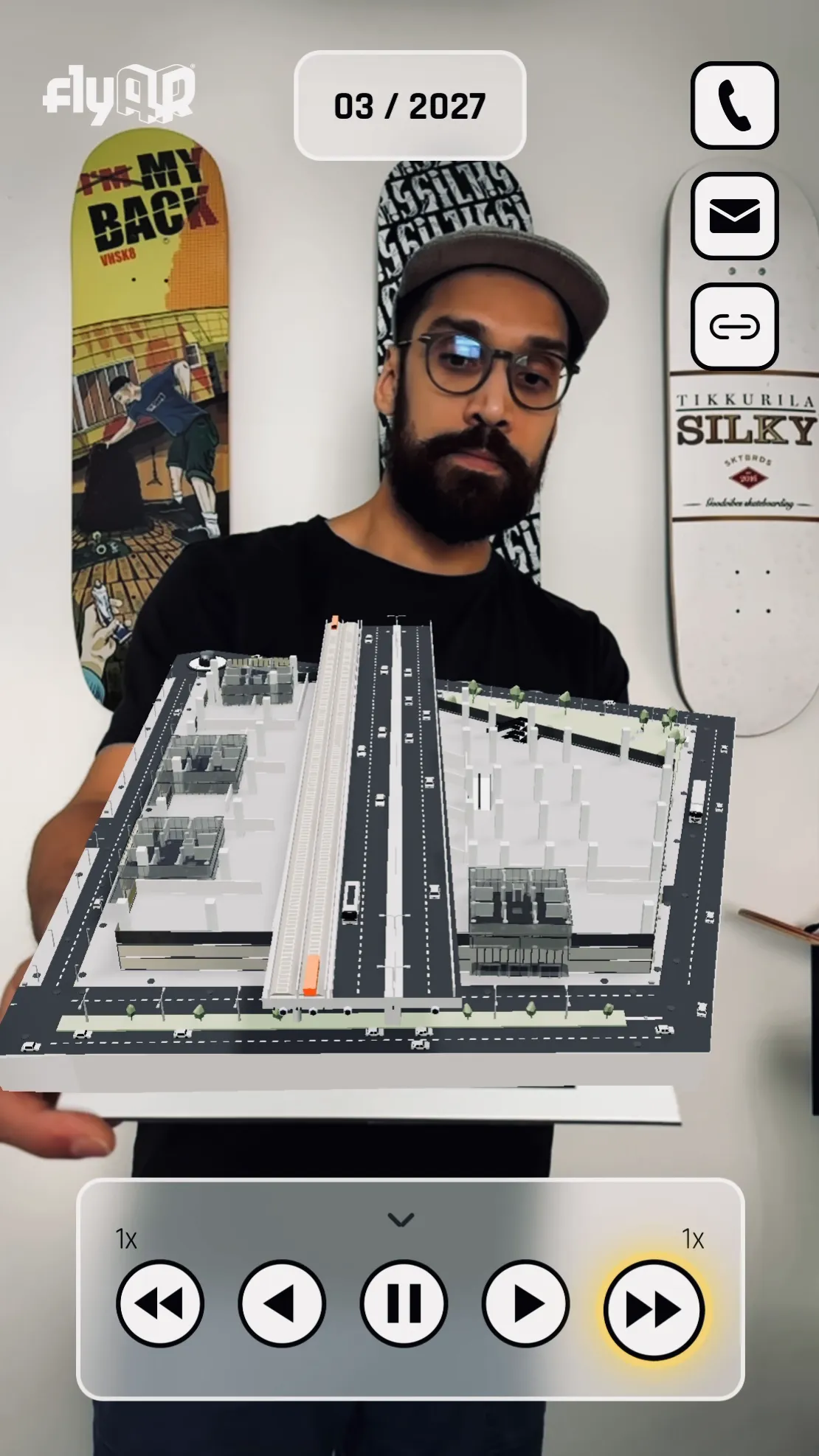
Image-tracking WebAR for construction communication and print-triggered project views.
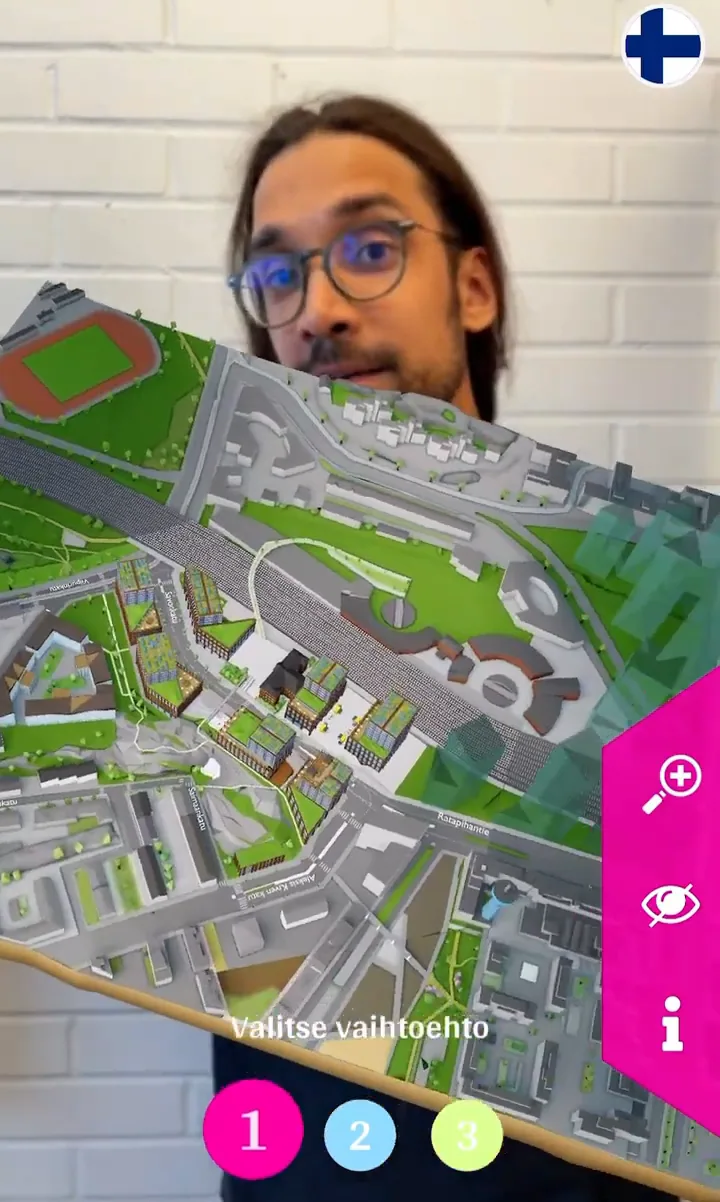
Savonkatu: WebAR plus online 3D for comparing development options from print and web.
For who · why now
Teams who want AR to launch from print, packaging, signage, websites, project pages, product pages, or campaign material without asking the audience to install an app.
What it earns the buyer
Turn relevant print, packaging, signage, and web touchpoints into interactive AR entry points.
Show products, places, stories, and scale from a phone browser with a low-friction launch flow.
Reuse optimized 3D assets across WebAR, online 3D, short videos, and on-location demos.
What you get
App-free AR experience that anchors to an image target or your surroundings
Target-image guidance, launch page, and campaign or signage material support
Optional online 3D fallback
WebAR starts from the launch surface
The print, package, sign, page, or place where AR should open
Digital media content: 3D assets, 360 images, graphics, or other source material
Campaign, story, product, or project information
Target-image artwork
Brand and language requirements
Where you want to take someone who came this far
Don't have everything? Start with what you have. On the first call we'll tell you what's worth creating, and what's not.
WebAR is useful when a physical or digital touchpoint should open into something experiential. These references show cultural trails, resident communication, and product presentations.
Same six steps, adapted to each project's requirements. The first call decides where to enter and what to skip.
01
Choose the trigger
Decide whether the AR should open from an image target, product package, website, floor placement, or printed material such as posters, flyers, handouts, floor stickers, or other print products.
02
Prepare the AR assets
We optimize or create the 3D, define animation and interaction, and keep the scene light enough for browser launch on real phones.
03
Design the phone path
The launch screen, permissions, instructions, language versions, and calls to action are designed around the audience, the use case, and the context where they open it.
04
Implement, test, and iterate
We implement the functionality and informational content, test the experience on real devices, and iterate until it works the way the use case needs.
05
Publish and connect
We deliver the final AR-experience, URL, QR and connect the AR moment to a useful next step for the onboarded user.
06
Reuse the asset
The same optimized 3D asset can often support online 3D, sales material, events, and future AR variants.
FAQ
The questions buyers actually ask. Open one to read.
Q01Does WebAR require an app?+
No. WebAR opens from a link or QR code. The exact AR mode depends on the use case, device, and tracking method, but the default path is app-free.
Q02What is image tracking?+
The camera recognizes a designated image, package, sign, postcard graphic and anchors the augmented content to it. The target image needs enough visual detail and contrast to track reliably.
Q03Can WebAR work from print?+
Yes. WebAR is a strong way to augment all relevant print materials: brochures, posters, packaging, postcards, signage, event material, and direct mail.
Q04What is floor placement?+
Floor placement lets a user place a model into their environment from the browser. It is useful for objects, products, scale comparisons, and lightweight spatial previews.
Q05Can the same WebAR asset become online 3D?+
Often, yes. We usually plan the 3D so it can also become an online 3D embed, a sales link, a video capture, or a larger AR experience later. In most projects where 3D-asset creation is included, we will hand the 3D files over to our client for potential further use.
AppsFlyer's 2025 benchmark across 28 billion installs puts Day-1 retention at around 25%. AR apps sit below that floor, because every reviewer is a single-use case, not a habit. WebAR removes the funnel. The link that opened the experience the first time still opens it the second.
Rework runs around 12% of a typical construction budget. Peer-reviewed BIM studies in 2025 report that putting an optimised 3D model in front of stakeholders before the first pour prevents at least a third of that, and as much as half on projects that share the model early. One Asian rail case caught 3,000 design clashes and shaved 12% off construction cost on its own.
Shopify's own data, drawn from millions of stores. The 65% sits next to a 94% conversion lift on stores that add any 3D content, and a 40% drop in returns when AR closes the imagination gap. The mechanism carries from product pages to construction, museums, and brand work.