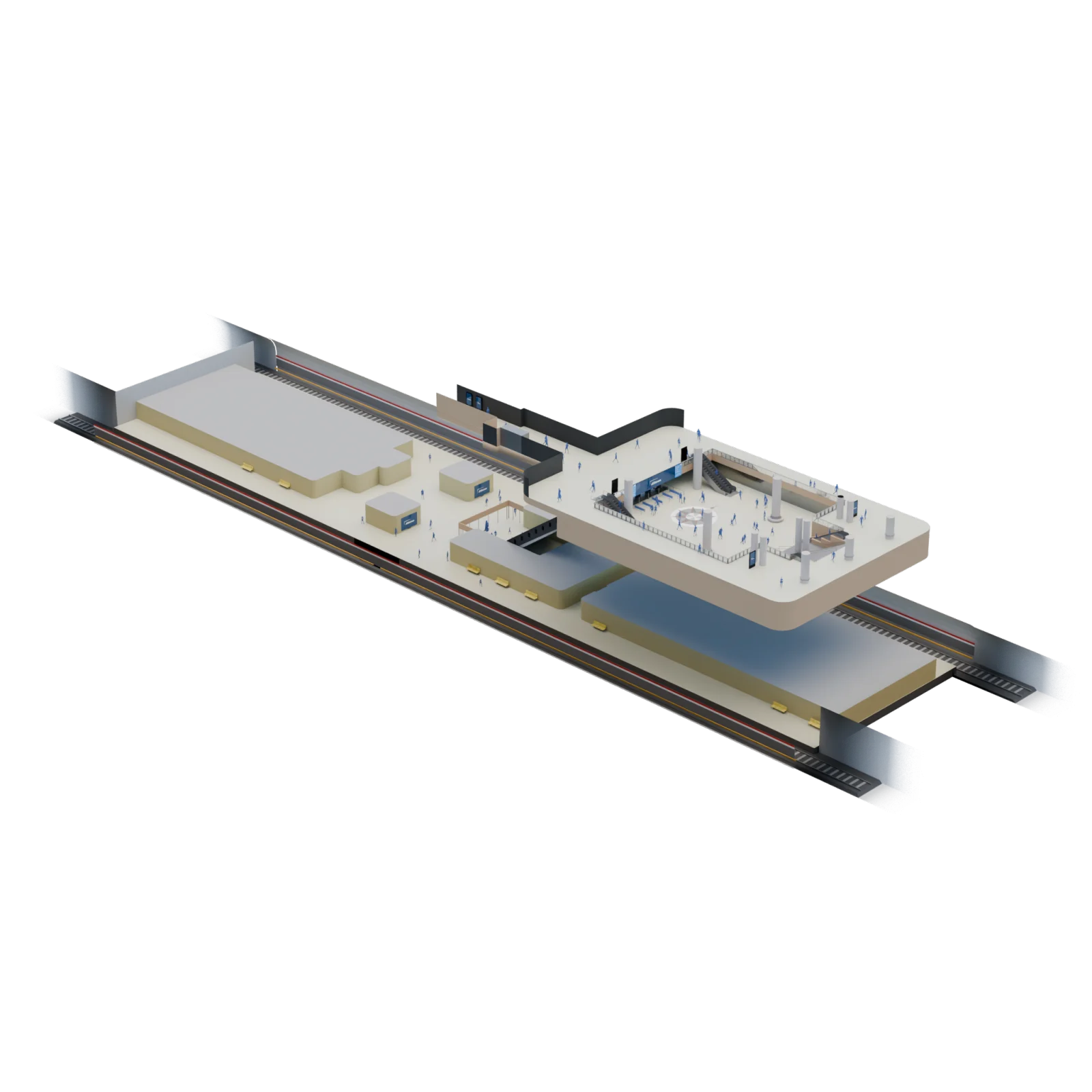
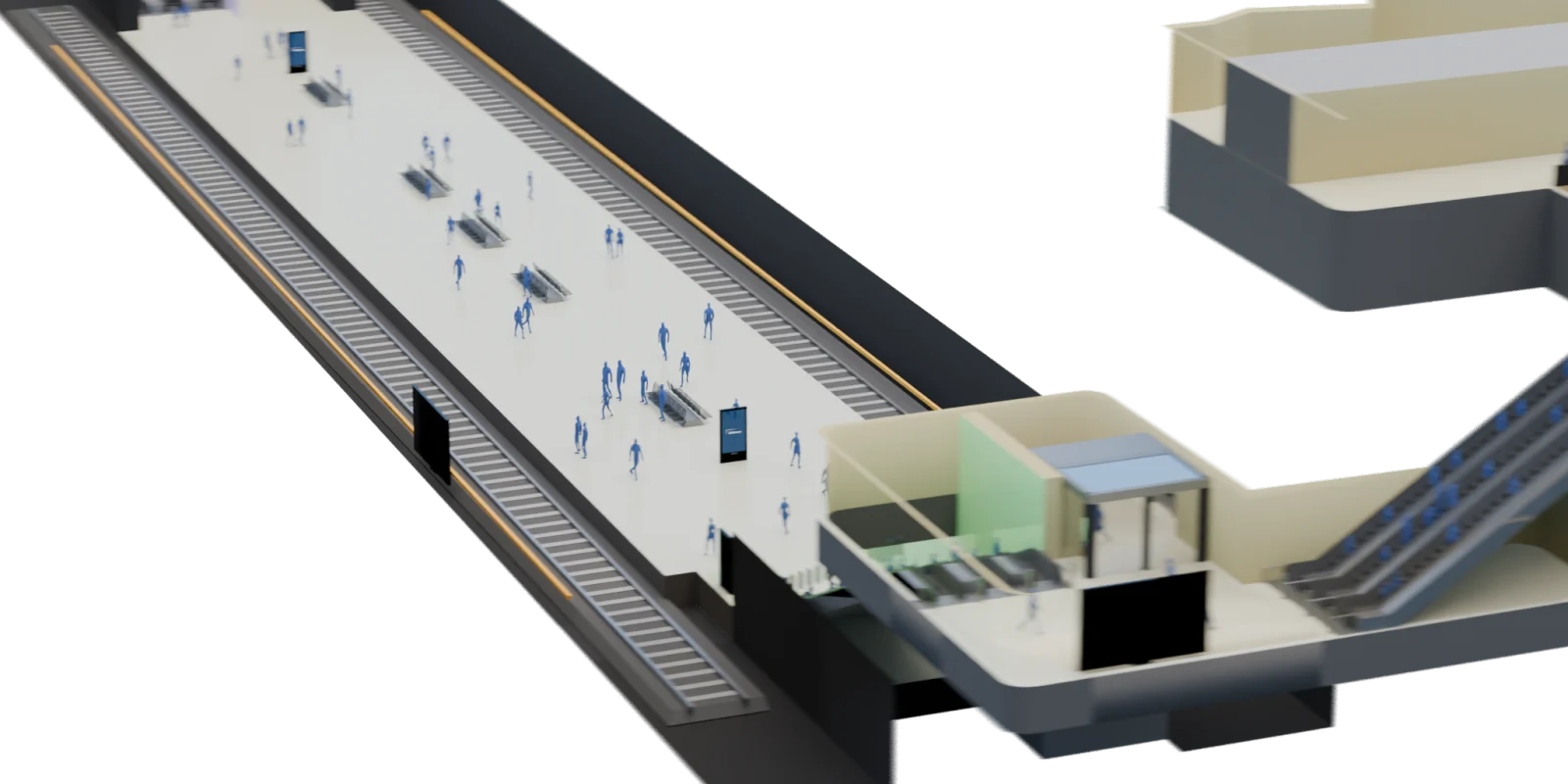
JCDecaux's Helsinki metro inventory is dozens of digital signage screens across multiple stations, sizes, and aspect ratios. We built an online interactive 3D platform of three stations so the sales team and clients can see the network at once, then move to eye-level for any single placement.
Client
JCDecaux
Sector
Media · OOH
Year
2026
Service
Media & OOH sales tools
Delivery
Browser · QR
Helsinki central station. Full 3D model of the platform level, screens in context.
Pause
01 Problem
Selling a network from a screenshot
Selling a metro signage network from a screenshot or a placement list is hard. Buyers can't see the scale, the journey, or how a single campaign would land across screens.
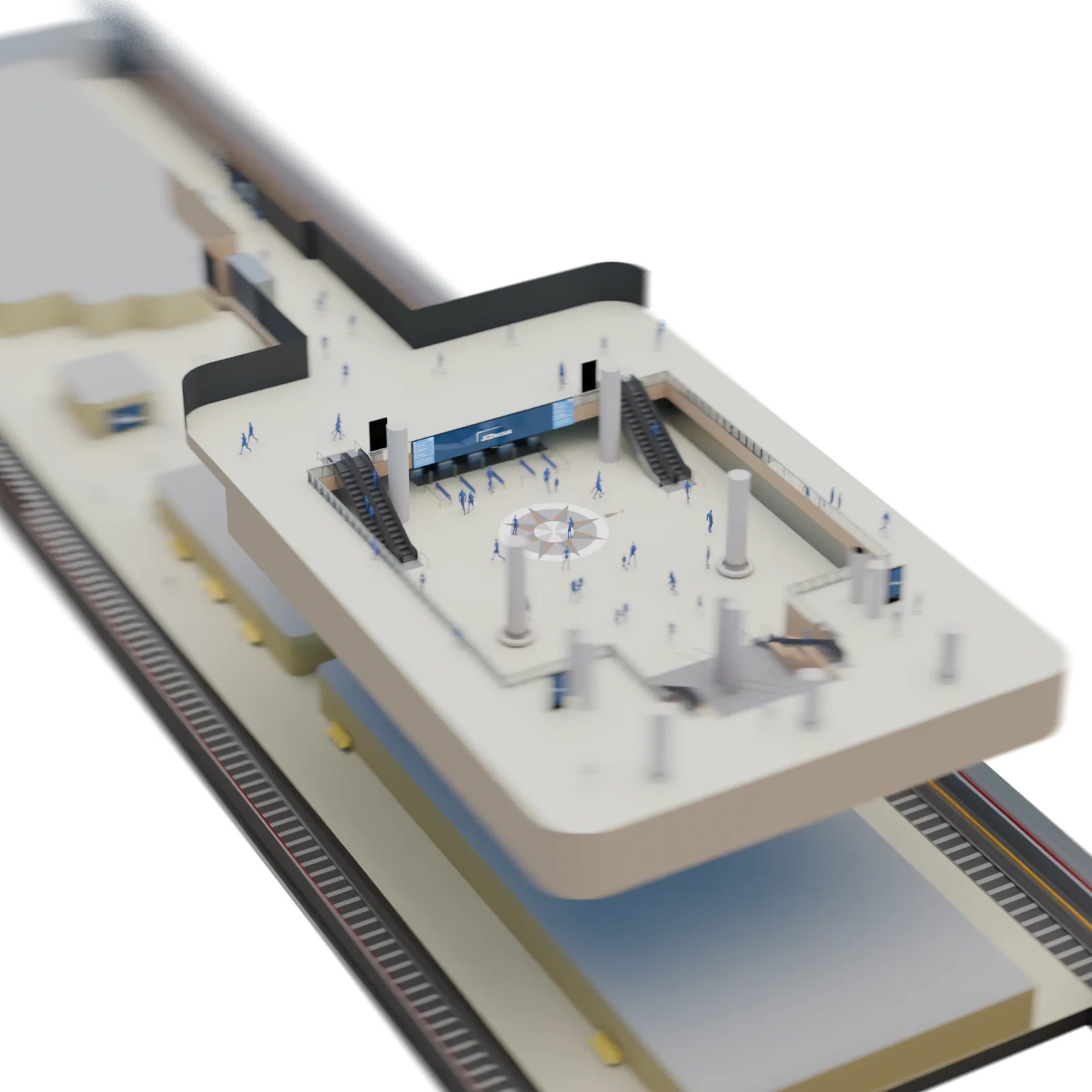
Central station from above. The whole platform level reads as one network of screens.
02 Approach
Walk the whole network in a browser
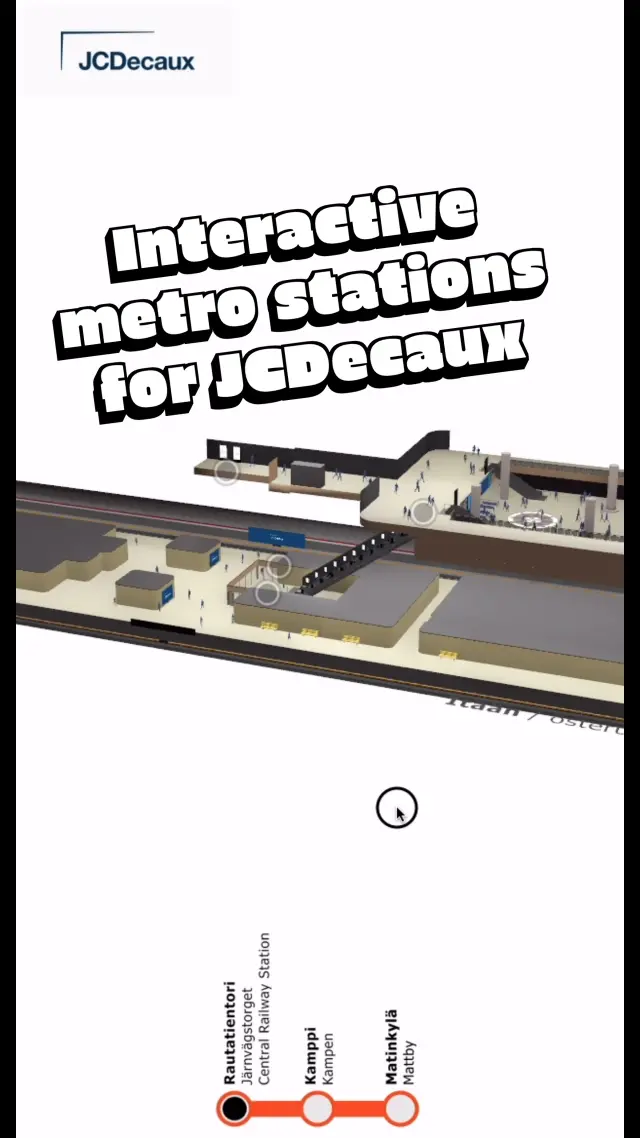
We built a desktop-first interactive 3D platform of three Helsinki metro stations. It opens at station overview, supports clickable hotspots into eye-level viewpoints, and lets the sales team drop a campaign asset onto a single screen and have it apply across every matching aspect ratio across the network.
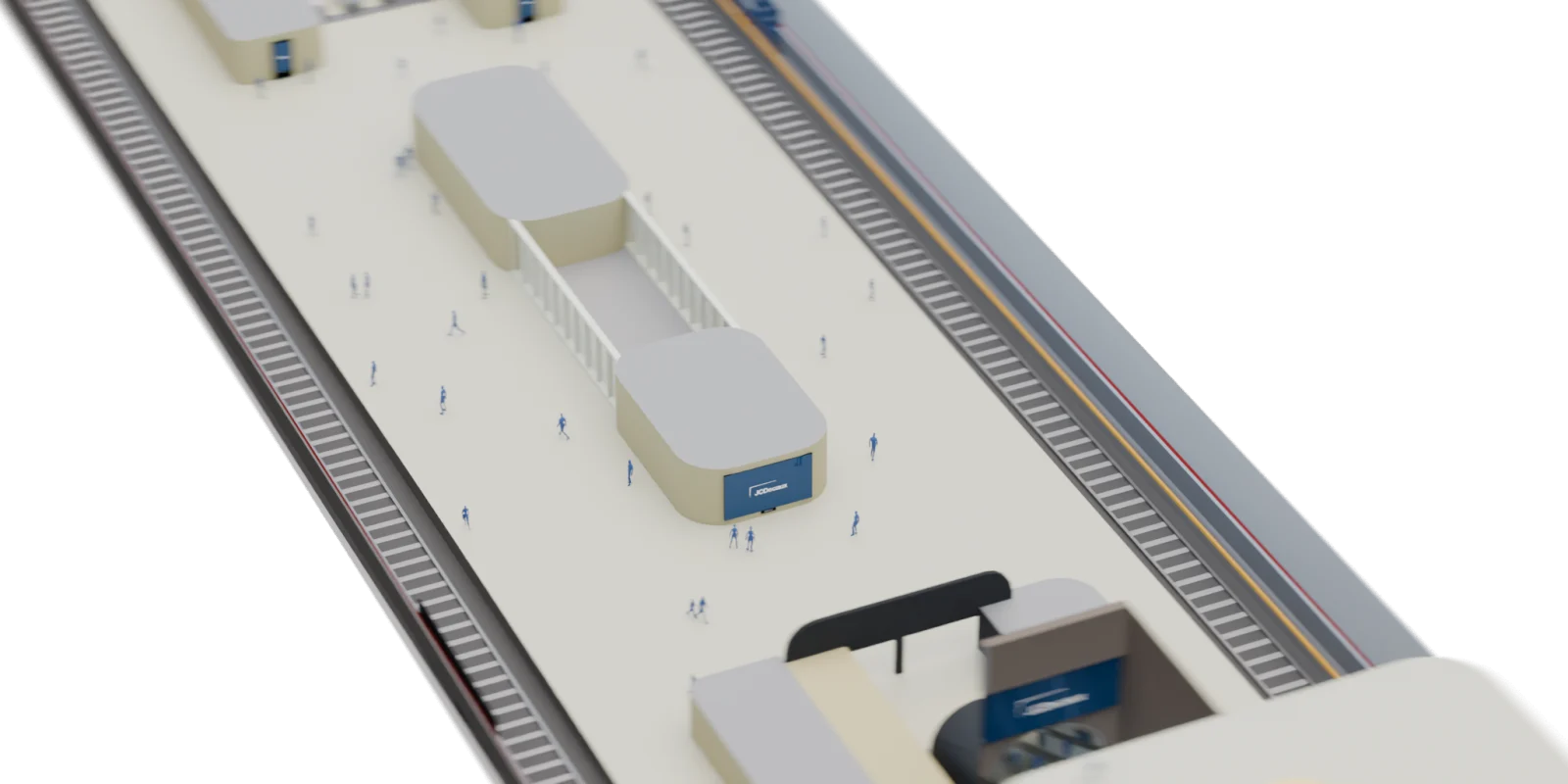
Kamppi station. Eye-level among the digital signage.
03 Outcome
Conversations start from the network, not a list
Sales conversations start from station overviews, not screenshots.
Clients preview their own campaign assets across matching screen formats.
The network reads as one coherent media environment instead of an inventory list.
Working with FlyAR was smooth from start to finish. As we searched for a new way to showcase our new inventory for our clients FlyAR easily picked up the essentials in the brief and the end product matched our expectations.
Inputs we worked from
Station floor plans
Screen geometry
Aspect ratio specs
Audiences
JCDecaux sales team
Brands
Advertising agencies
Service used
Media & OOH sales tools
Sell spatial media with spatial tools. Let buyers inspect stations, vehicles, and venues in context.
AppsFlyer's 2025 benchmark across 28 billion installs puts Day-1 retention at around 25%. AR apps sit below that floor, because every reviewer is a single-use case, not a habit. WebAR removes the funnel. The link that opened the experience the first time still opens it the second.
Rework runs around 12% of a typical construction budget. Peer-reviewed BIM studies in 2025 report that putting an optimised 3D model in front of stakeholders before the first pour prevents at least a third of that, and as much as half on projects that share the model early. One Asian rail case caught 3,000 design clashes and shaved 12% off construction cost on its own.
Shopify's own data, drawn from millions of stores. The 65% sits next to a 94% conversion lift on stores that add any 3D content, and a 40% drop in returns when AR closes the imagination gap. The mechanism carries from product pages to construction, museums, and brand work.