
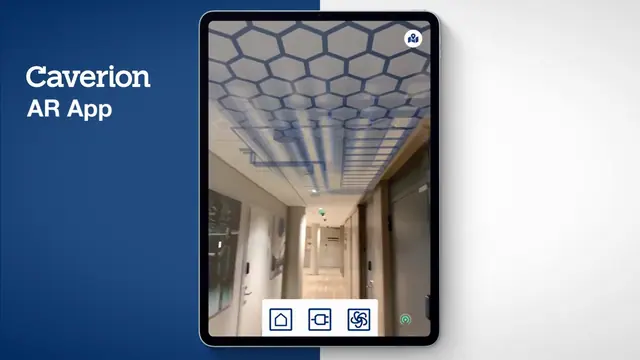
See hidden building systems while standing in the actual building

Caverion · BIM-in-context AR app

For Caverion, flyAR and Immersal created a Unity iPad proof of concept that overlaid BIM layers inside Caverion's Vantaa headquarters, including building systems and indoor navigation.

Client
Caverion
Sector
Building technology
Year
2019
Service
Construction marcom & spatial viz
Delivery
Browser · QR
Caverion · BIM-in-context AR app · case reel

01 · Problem

Problem

Building information is often hidden behind walls, drawings, or specialist tools. The concept needed to show BIM data in the place where it matters.

02 · Approach

Approach

We used Immersal VPS and Unity to align BIM layers with the real headquarters. Users could toggle wall mesh, water pipes, air pipes, and building-technology layers, then navigate to rooms and facilities.

03 · Outcome

Outcome

  • The app showed building systems in context through the iPad camera.
  • Layer toggles made hidden infrastructure inspectable.
  • Indoor navigation connected BIM visualization to practical building use.

/Inputs we worked from

  • BIM model data
  • Headquarters scan
  • Indoor navigation targets

/Audiences

  • Facilities teams
  • Building-technology stakeholders
  • Smart-building buyers

/Deliverables

  • Unity iPad app
  • Immersal VPS alignment
  • Toggleable BIM layers and navigation

/Service used

Construction marcom & spatial viz

Turn drawings, BIM, and renders into experiences buyers, residents, and approvers can open and explore.

Worth knowing before you write a brief

AppsFlyer's 2025 benchmark across 28 billion installs puts Day-1 retention at around 25%. AR apps sit below that floor, because every reviewer is a single-use case, not a habit. WebAR removes the funnel. The link that opened the experience the first time still opens it the second.

Source: AppsFlyer 2025 · Adjust 2026

Read what installs cost an AR campaign