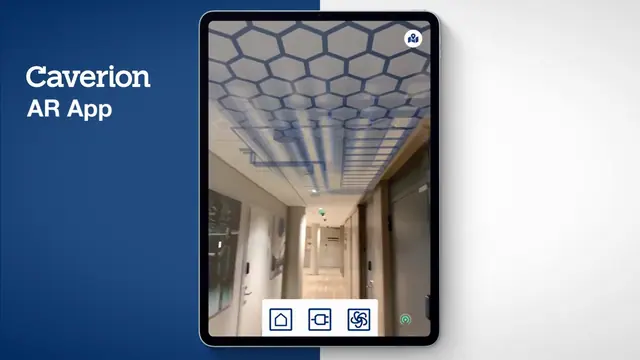
See hidden building systems while standing in the actual building
Caverion · BIM-in-context AR app
For Caverion, flyAR and Immersal created a Unity iPad proof of concept that overlaid BIM layers inside Caverion's Vantaa headquarters, including building systems and indoor navigation.
- Client
- Caverion
- Sector
- Building technology
- Year
- 2019
- Service
- Construction marcom & spatial viz
- Delivery
- Browser · QR
01 Problem
Problem
Building information is often hidden behind walls, drawings, or specialist tools. The concept needed to show BIM data in the place where it matters.
02 Approach
Approach
We used Immersal VPS and Unity to align BIM layers with the real headquarters. Users could toggle wall mesh, water pipes, air pipes, and building-technology layers, then navigate to rooms and facilities.
03 Outcome
Outcome
- The app showed building systems in context through the iPad camera.
- Layer toggles made hidden infrastructure inspectable.
- Indoor navigation connected BIM visualization to practical building use.
Inputs we worked from
- BIM model data
- Headquarters scan
- Indoor navigation targets
Audiences
- Facilities teams
- Building-technology stakeholders
- Smart-building buyers
Deliverables
- Unity iPad app
- Immersal VPS alignment
- Toggleable BIM layers and navigation
Service used
Construction marcom & spatial viz
Turn drawings, BIM, and renders into experiences buyers, residents, and approvers can open and explore.